Commercial Snow Removal
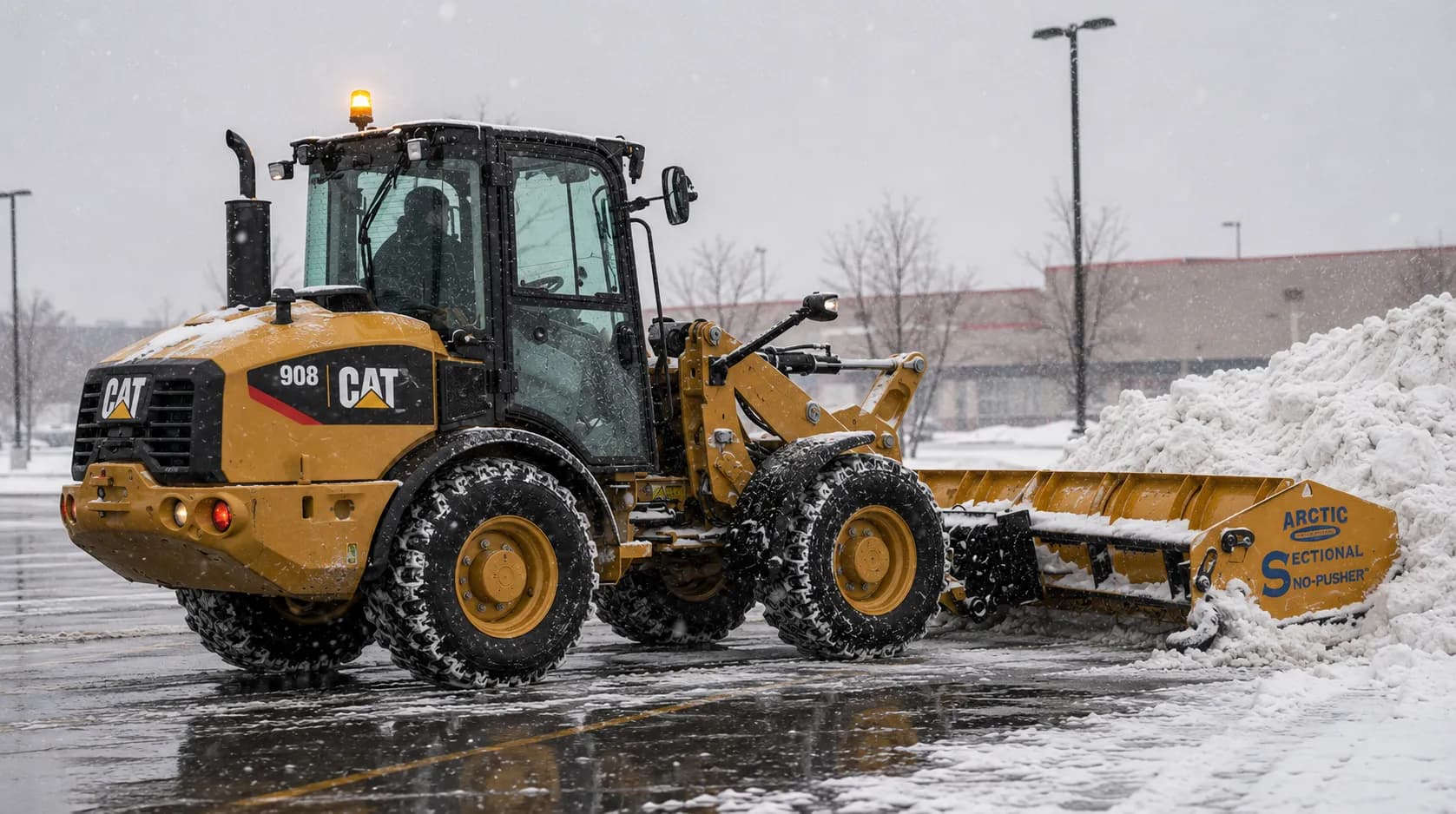
Loaders and box pushers on the open lots. Plow trucks where they fit. Cleared before you open.
DetailsCommercial snow & ice management · Fond du Lac, Wisconsin

Fond du Lac, WI
Commercial snow removal and ice management for businesses and properties throughout Fond du Lac and the surrounding area. Loaders, pushers and trucks sized to the property — on site before your doors open.
Storm dispatch: (920) 375-1333Dispatch runs around the clock through declared events.
Loaders, pushers and trucks sized to the property.
Plowing, walkways and ice control on one contract.
Certificate of insurance available on request.
What we do
Four scopes, one contract, one crew accountable for the whole property. Most clients run all four; each can be bought on its own.
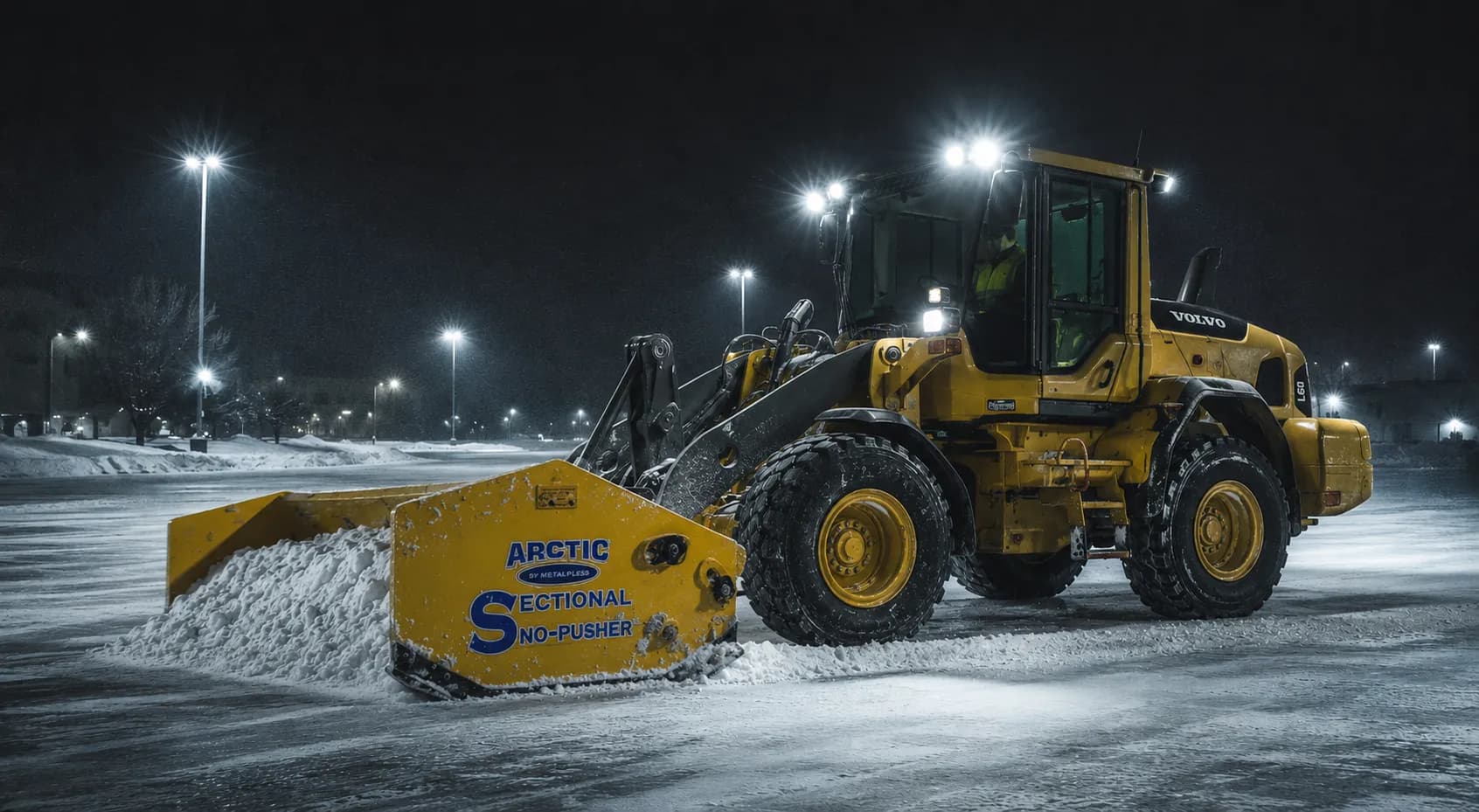
Loaders and box pushers on the open lots. Plow trucks where they fit. Cleared before you open.
Details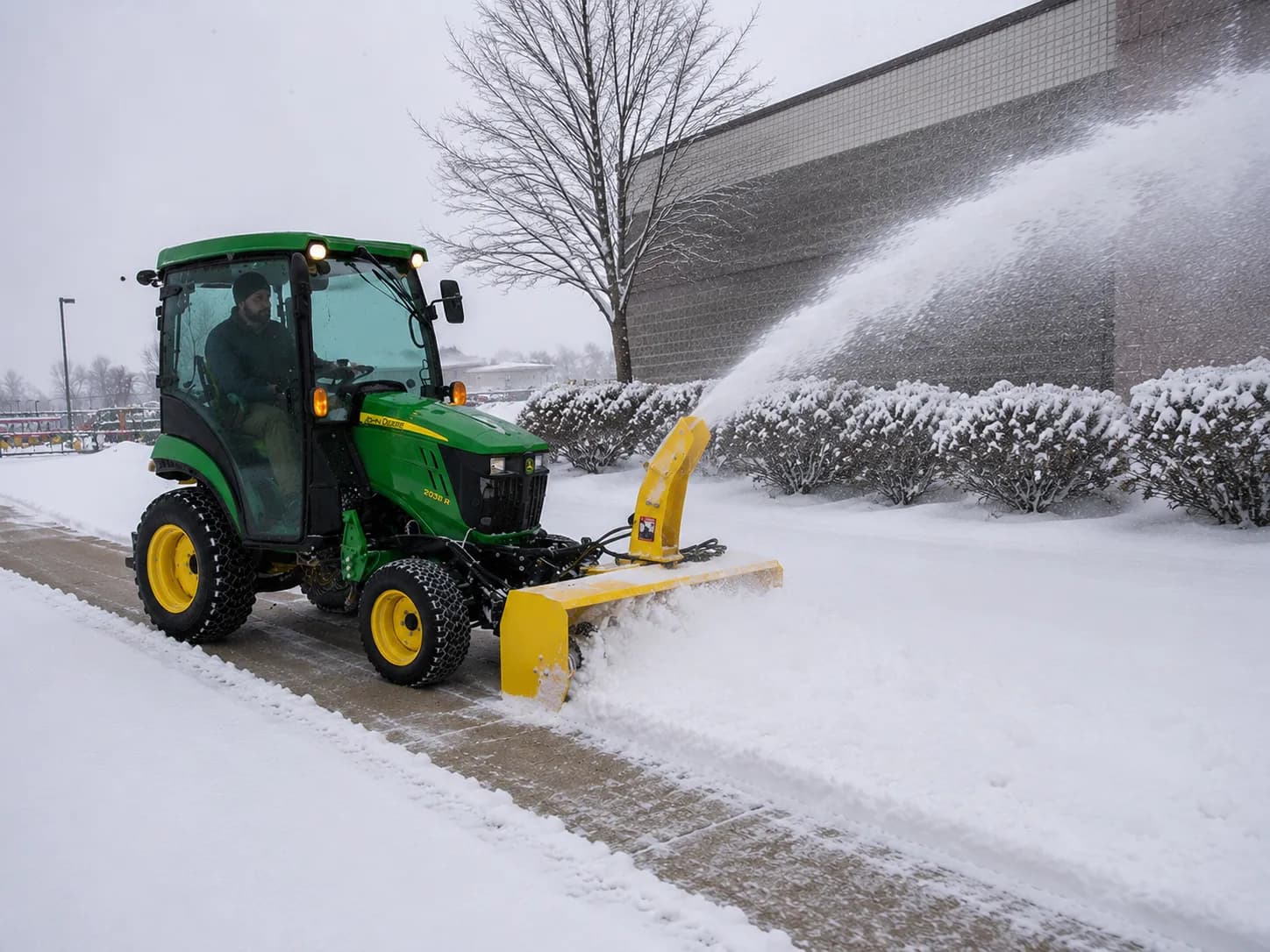
Entrances, walkways, ADA ramps and exits — cleared to the surface, then treated.
Details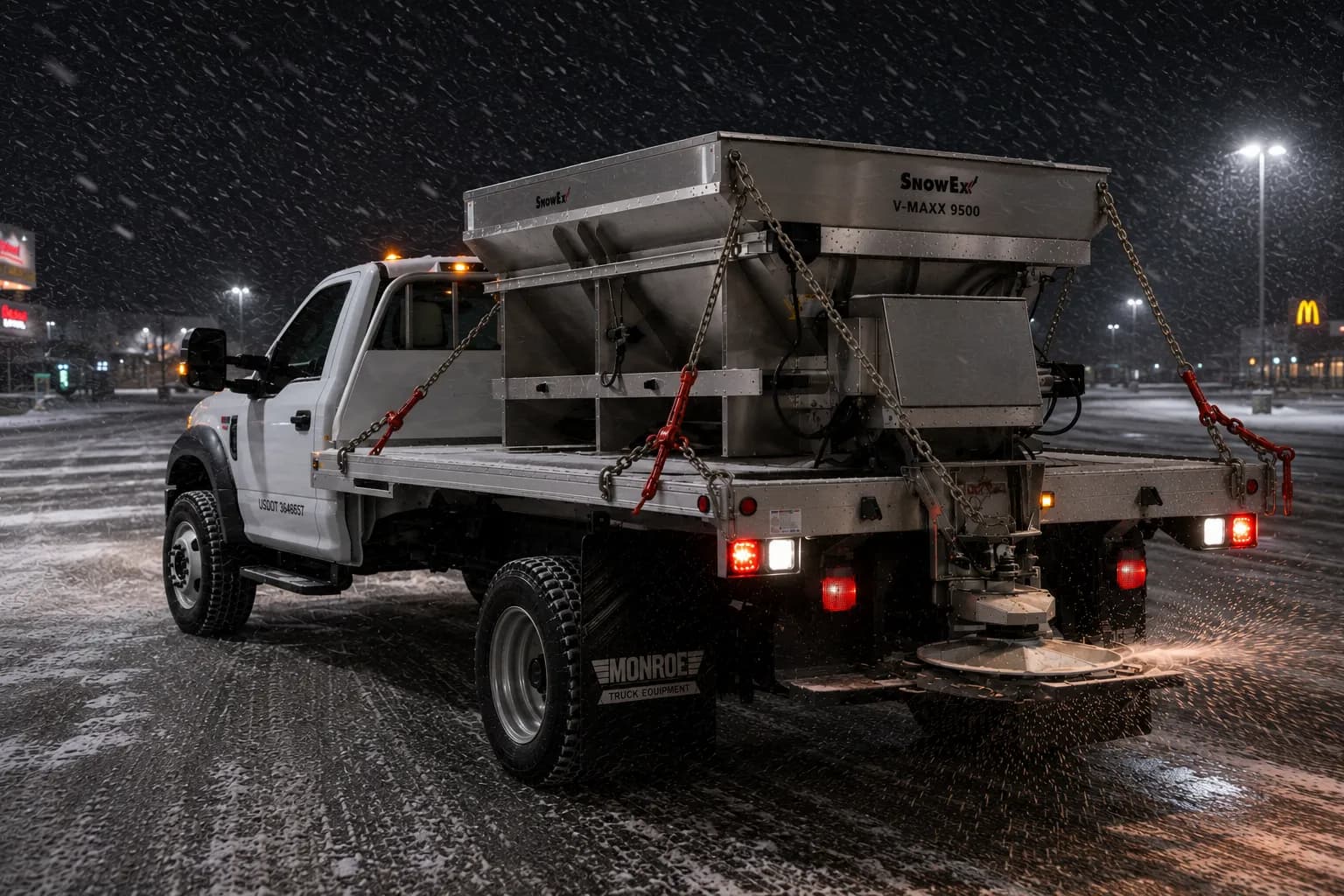
Lot and walkway ice control — pre-treatment, post-storm application, refreeze monitoring.
Details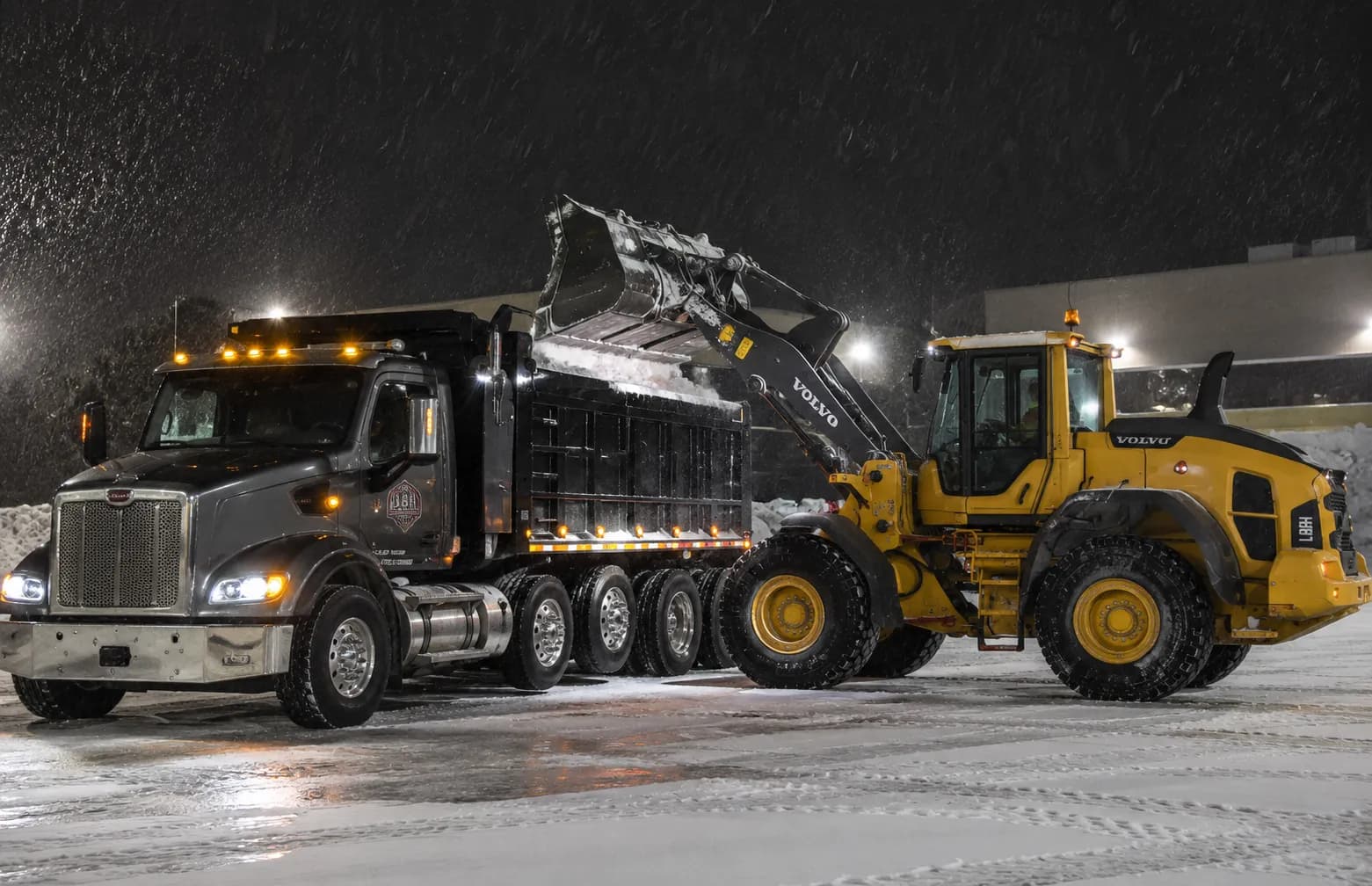
Properties we service
Commercial snow management is an operation, not a service call. It takes equipment staged before the storm, crews assigned to specific sites, and a plan everybody already knows by the time the first flake lands.
Shift changes, dock access and truck routes that cannot wait.
Storefront walks and customer parking clear before opening.
Patient drop-offs, ramps and entrances held to a higher standard.
Tenant parking cleared ahead of the morning arrival window.
Resident parking, drive lanes and building entrances.
Shared drives, guest parking and common walkways.
Trailer aprons, yard lanes and dock approaches.
Service-time schedules, including Sunday mornings after overnight snow.
Bus loops, drop-off lanes and pedestrian routes.
Drive-through lanes, ATM approaches and entrance walks.
Equipment
The right machine gets sent to the property, not whatever is left in the yard. Open lots move with loaders and pushers; tight sites run skid steers and trucks; walkways get their own equipment entirely.
Box pushers on open lots — the volume mover on anything large.
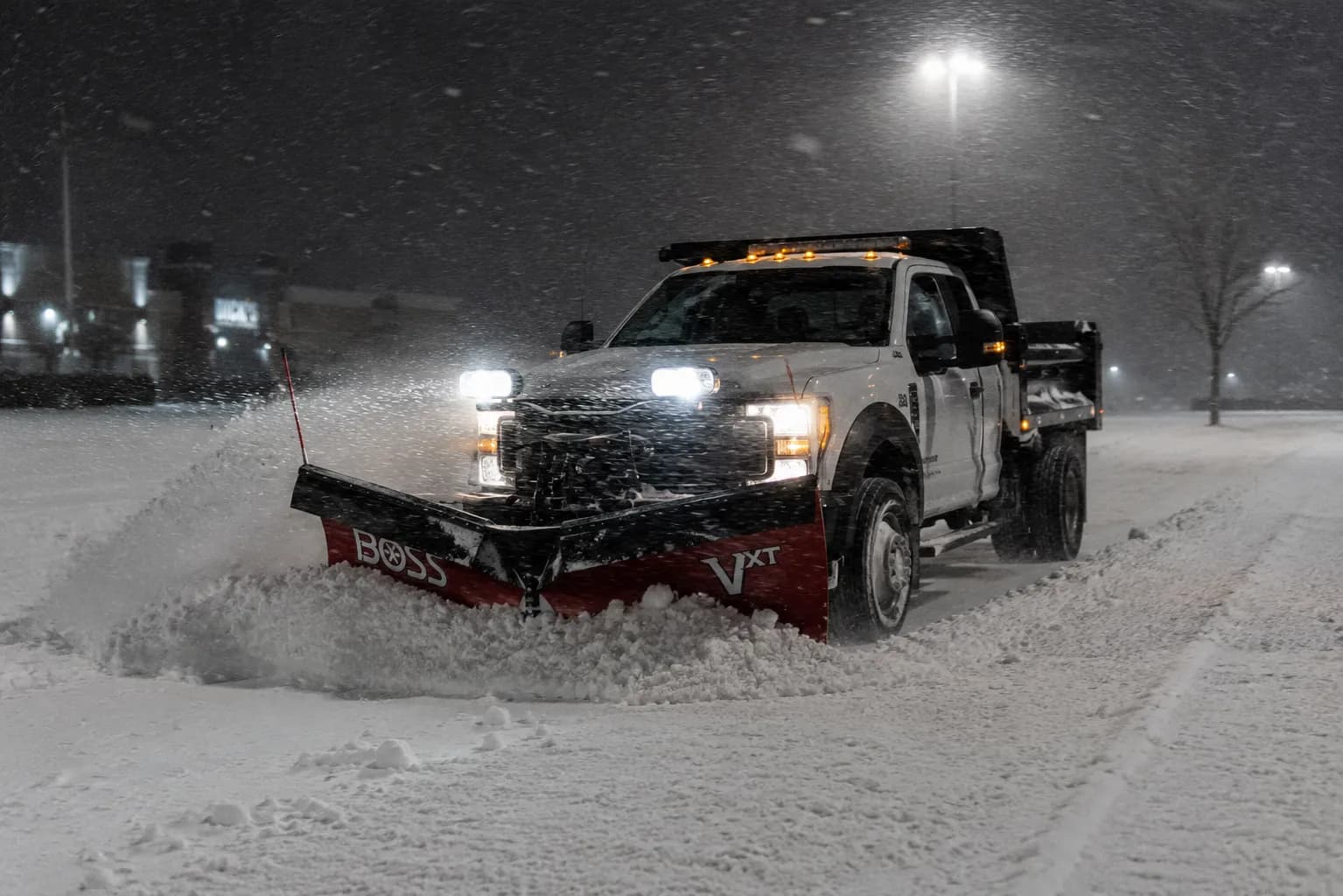
Heavy-duty trucks on drive lanes, approaches, and properties too tight for a loader.
Compact tractors with front-mounted blowers on long walkway runs.
Calibrated stainless spreaders for lots, plus walk-behind units for walkways.
Haul-off capacity for when the banks have to leave the property.
Independently floating sections follow pavement contour and scrape closer than a straight blade.
Tight lots, islands, dock wells and the corners bigger machines cannot reach.
Storm operations
Commercial customers are not buying a guy with a plow. They are buying a sequence that starts before the snow does and does not end until the lot is back to pavement.
We track incoming systems and set the plan before anything falls — which properties trigger first, what equipment goes where, and who is running it.
Where the forecast and pavement temperature justify it, lots and walkways are treated ahead of the storm so snow has a harder time bonding to the surface.
Crews mobilize at your trigger depth. Loaders and pushers on the open areas, trucks on lanes and approaches, snow moved to the mapped stacking zones.
Walkway crews run their own scope in parallel — entrances, ramps, exits and connecting paths cleared and treated, not left until the lot is finished.
Cleared surfaces are treated to handle the residual film plowing leaves behind, at rates matched to the pavement temperature that night.
A final pass once traffic clears — stall lines, curb edges, dock approaches and anything the storm-height passes could not reach. Piles assessed for haul-off.
Local conditions
Sitting at the south end of Lake Winnebago, the city gets wind that most of the region does not. Storms come across open water and open farmland with nothing to slow them down, and that is what makes a lot here different to manage than one thirty miles inland.
The snowfall total is rarely the whole story. Six inches with a twenty-mile-an-hour wind behind it will drift a lot back in behind the plow, and the drifts always land in the same places — along building faces, against fence lines, across the exposed side of a lot with fields to the west. Properties on the edge of town see it worst, and the second and third passes matter as much as the first.
Timing is the other constant. Systems tend to move through overnight or early in the morning, which means the window between when the snow stops and when your employees arrive is often very short. That window is the entire job. Crews are staged and running before it opens, not dispatched after somebody notices the lot is full.
Then February arrives and the freeze-thaw starts. Days above freezing, nights well below. Meltwater runs across pavement all afternoon and turns to glare ice after dark on lots that look perfectly clear at 4pm. More people get hurt in that stretch than during the storms, which is why ice control runs on its own schedule instead of being treated as a plowing add-on.
Outside this list? Call (920) 375-1333 — if the property is close enough to service properly, we will say so, and if it is not, we will tell you that too.
Questions
Still deciding? Call and talk it through with someone who actually runs the lots.
No. We run commercial and institutional property only — parking lots, retail centers, industrial sites, medical, office, multi-family and similar. That focus is what allows the equipment and the storm schedule to work.
It depends on the size of the lot, how much walkway there is, your service level and your trigger depth. We walk the property, put a number on it, and quote seasonal and per-event side by side so you can compare.
Early fall. Routes fill by late October, and signing early means your site plan and stacking zones are mapped before the first event rather than during it.
Yes. Most commercial work runs overnight and in the early morning so the lot is clear before employees and customers arrive.
Yes. A certificate of insurance is available on request, and we can name your property on it where your lease or management agreement requires it.
Fond du Lac and North Fond du Lac plus Oshkosh, Ripon, Waupun, Rosendale, Campbellsport, Lomira and Oakfield. If you are just outside that, call and ask — we will give you a straight answer.
Now hiring
Snow work is nights, early mornings and weekends from November through April. It pays well, it is steady through the season, and the crews we keep tend to come back year after year.
Would rather just call? Ring (920) 375-1333 and ask about openings.
Get your property on the snow schedule before winter. Site walks and quotes are free, and routes fill up by late fall.