

Fond du Lac, WI
Commercial Salting & Deicing in Fond du Lac
Plowing moves the snow. Ice control is what keeps people upright afterward.
Most winter injuries on commercial property do not happen during the storm. They happen two days later, on a lot that looks completely clear, after meltwater ran across the pavement in the afternoon and froze in place once the sun went down.
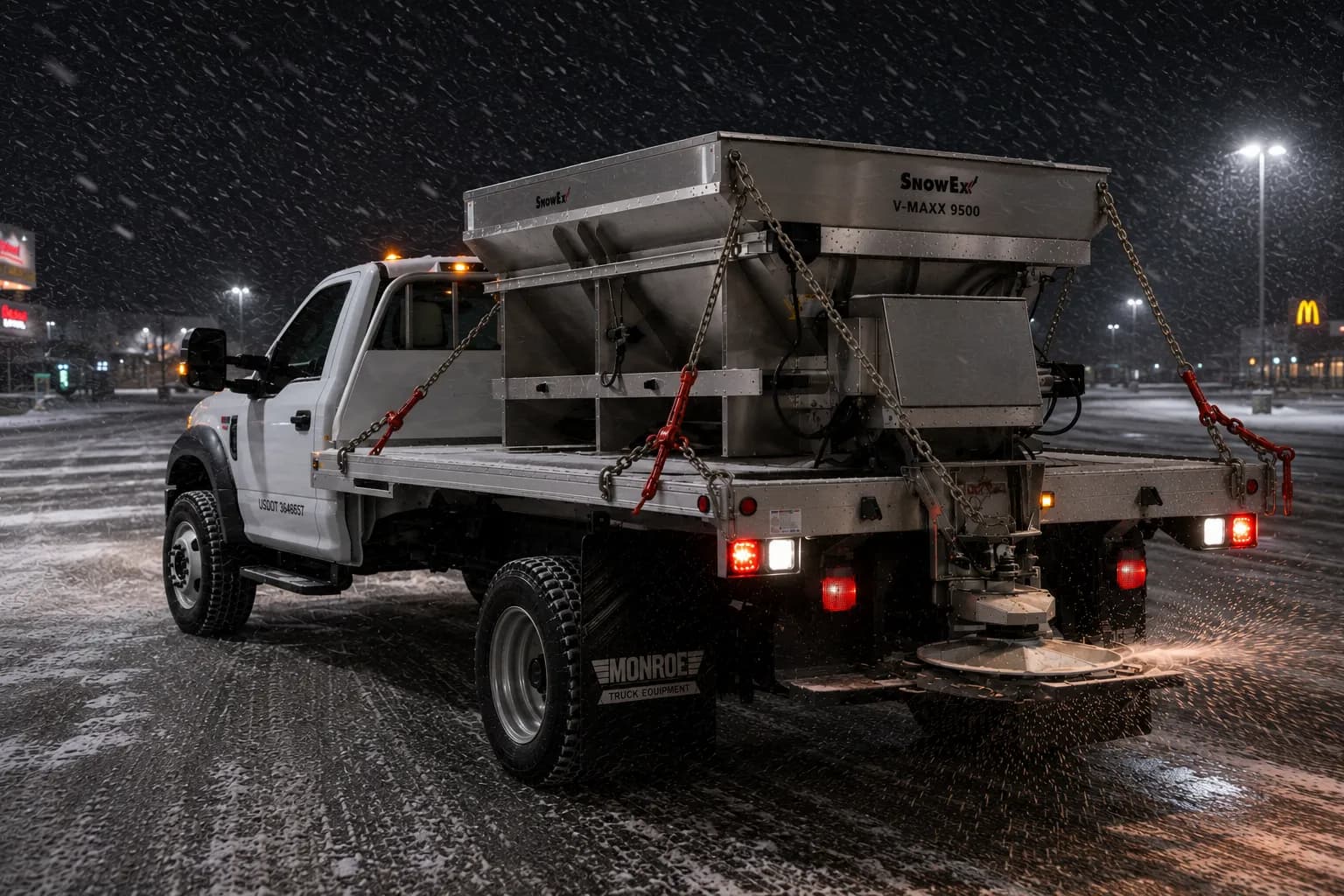
Ice control is a separate discipline from plowing and it runs on a different schedule. We treat lots, drive lanes and walkways ahead of storms where it helps, after clearing as standard, and on freeze-thaw days when no new snow has fallen at all.
What is
Covered
Parking lot salting
Calibrated spreaders across parking areas, drive lanes and internal intersections.
Pre-treatment
Applied ahead of a forecast event so snow and ice have a harder time bonding to pavement.
Post-storm application
Standard after clearing, to handle the residual film that plowing always leaves.
Walkway treatment
Pedestrian-appropriate material on sidewalks, entrances and ramps.
Refreeze management
Return visits on freeze-thaw days, when afternoon melt refreezes after sundown.
Service documentation
Time-stamped records of each visit and application for your risk-management file.
Details
How this actually works
Serving Fond du Lac, North Fond du Lac, Oshkosh, Ripon, Waupun and the surrounding communities.
See the full service areaPre-treatment versus deicing
Pre-treatment goes down before the snow arrives. Its job is to stop the first layer from bonding to the pavement, which makes the eventual plow more effective and usually reduces how much material the property needs overall.
Deicing is what happens after — breaking down what has already frozen to the surface. Both have their place. Which one applies on a given night depends on pavement temperature, what is in the forecast, and how the property is used, which is why that call is made per storm rather than from a fixed calendar.
Application rates are a property-by-property decision
There is no single correct salt rate. Pavement temperature, surface type, drainage, slope, sun exposure, traffic volume and the material itself all change the answer. A rate that works on an open retail lot at 28°F is wrong on a shaded north-side walkway at 15°F.
Rates get set per property and per event by the crew running it. Under-applying leaves ice behind; over-applying wastes material, damages concrete and landscaping, and runs off into storm drains for no benefit at all.
Documentation matters more than people expect
If a slip-and-fall claim is filed against your business, the question will be what was done, when, and by whom. A time-stamped log showing the property was treated at 4:12am is a materially different position than someone recalling that it probably got salted that morning.
We can provide records of each visit and application. Keep them with your insurance file for the season.
Questions
Deicing & Salting FAQs
If the answer you need is not here, call and ask.
Can we get salting without plowing?
Yes. Standalone ice control is common for freeze-thaw stretches, black-ice mornings and refreeze events where nothing new has fallen but the surface is dangerous.
Do you salt after every plow visit?
It is standard on most contracts, because plowing leaves a residual film that refreezes. It can also be set to on-request if you would rather control it yourself.
What do you use on sidewalks versus parking lots?
Walkways get a pedestrian-appropriate ice-melt product; lots and drive lanes get bulk material. Both are matched to the temperature and conditions that night.
Will salt damage our concrete or landscaping?
Over-application can, especially on newer concrete and along turf edges. Correct rates and correct placement matter. Tell us about new concrete, sensitive plantings or drainage concerns and we will adjust.
Do you provide records of applications?
Yes — time-stamped service logs for each visit, which is the documentation your insurer will want if a claim is ever filed.
What about black ice when it has not snowed?
That is exactly what refreeze monitoring covers. Afternoon melt running across pavement and freezing after dark is one of the most common causes of winter injuries on commercial property.
Related services
Don't wait for the first storm.
Get your property on the snow schedule before winter. Site walks and quotes are free, and routes fill up by late fall.